
Article · 26 July 2026
The Three Enemies of Africa: Why the Continent Remains Rich but Millions Stay Poor
Africa is one of the richest continents on Earth, yet millions of its people continue to live in poverty. Why? In this thought-provoking opinion, Mika Chavala argues that Africa's greatest challenges are not a lack of resources but three powerful enemies: a colonized mindset, leadership without accountability, and what he calls "professional colonialism." The article challenges Africans to rethink history, demand better governance, and embrace self-reliance as the foundation for lasting prosperity.
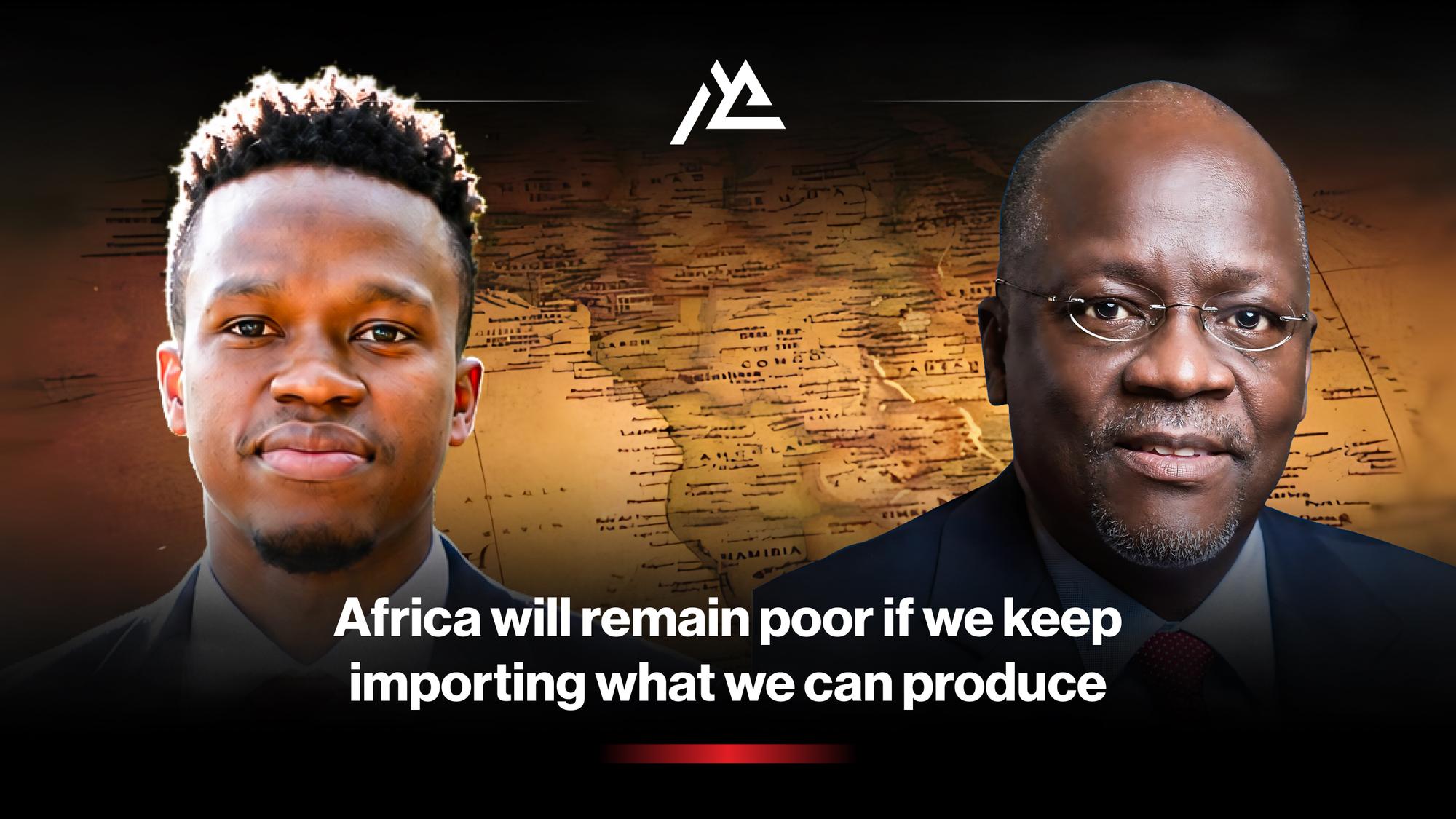
"Africa will remain poor if we keep importing what we can produce." — John Pombe Magufuli
Few leaders in modern Africa challenged the continent's economic model as directly as the late Tanzanian President John Pombe Magufuli. His statement was not merely about trade or manufacturing; it was a challenge to Africa's entire development philosophy. It forces us to confront uncomfortable questions about dependency, leadership, education, and the future of the continent.
Why does Africa continue to import products that could be manufactured locally?
Why do nations blessed with enormous natural wealth continue to depend on others for goods, technology, and even food?
More importantly, why has Africa, despite possessing extraordinary human and natural resources, struggled to translate its potential into widespread prosperity?
These are not questions with simple answers. However, if we are willing to examine our history honestly and evaluate the systems that govern our societies today, we begin to see that Africa's greatest obstacles are not a lack of resources but the way we think, the way we are governed, and the systems we have allowed to flourish.
The First Enemy of Africa: The Colonized Mind
Before Africa can transform its economy, it must first transform its thinking. Every great civilization in history was built first in the minds of its people before it was built with roads, factories, universities, or industries. Nations rise because people begin to believe that they are capable of solving their own problems. Likewise, nations decline when they lose confidence in themselves and begin to believe that every solution must come from somewhere else.
Africa's greatest battle is therefore not against poverty; it is against a mindset that has accepted dependency as normal.
One of the biggest contributors to this mindset is the way many Africans learn their own history. Across much of the continent, students are introduced to Africa through the lens of slavery, colonialism, and exploitation. They spend years learning how Africa was conquered, divided, and colonized, yet comparatively little time is devoted to understanding the civilizations that flourished before European colonial expansion.
Where are the stories of the Mali Empire, Songhai, Kush, Axum, Great Zimbabwe, Benin, Ethiopia, Kongo, Buganda, and countless other kingdoms that developed sophisticated systems of governance, commerce, education, architecture, and diplomacy?
Why do so many African children know more about European monarchs than African rulers who built prosperous societies centuries before colonialism?
This imbalance has consequences. When people grow up believing their history began with defeat, they unconsciously begin to see themselves as people who must always be rescued. Yet Africa was producing knowledge, conducting international trade, governing kingdoms, and developing cultures long before colonial rule. Remembering this history is not about romanticizing the past; it is about restoring confidence in what Africans are capable of achieving today.
Mindset is the engine of development. Every invention begins as an idea. Every business begins as a vision. Every national transformation begins with people who believe change is possible. If African minds are liberated from inferiority, dependency, and fear, the continent's future will inevitably change. A decolonized mind produces original ideas, confident leadership, innovation, and long-term solutions.
The Second Enemy of Africa: Leadership Without Accountability
While mindset determines vision, leadership determines whether that vision becomes reality. Africa is not poor because it lacks wealth. It is poor because too much of that wealth has failed to improve the lives of ordinary citizens.
The continent possesses some of the world's largest reserves of gold, cobalt, diamonds, lithium, oil, natural gas, fertile agricultural land, forests, and freshwater resources. Africa is home to one of the youngest and fastest-growing populations in the world. Every year governments collect billions of dollars through taxes, customs duties, licensing fees, natural resource royalties, and foreign investment. International corporations continue investing heavily in African economies because they recognize the continent's enormous economic potential.
Yet despite these advantages, millions of Africans continue to struggle with unemployment, inadequate healthcare, poor infrastructure, unreliable electricity, weak education systems, and limited industrial development.
This raises an important question: If the money exists, where are the results?
Consider Africa's ports. Every day, cargo ships carrying goods worth billions of dollars pass through ports in countries such as South Africa, Tanzania, Kenya, Nigeria, Egypt, Morocco, Ghana, and others. Governments generate substantial revenue through customs duties, port charges, import taxes, export fees, and logistics services. In addition, foreign direct investment continues to flow into mining, telecommunications, energy, agriculture, banking, and manufacturing.
With all these economic activities taking place, why do many citizens still experience little improvement in their daily lives? This is the question Magufuli repeatedly challenged Africans to ask. He argued that Africa's greatest problem was not the absence of resources but the mismanagement of resources and the misuse of public funds.
Whether one agreed with all of his policies or not, this observation deserves careful consideration. Development is not determined simply by how much revenue a country collects. It is determined by how effectively those resources are managed and invested in improving the quality of life for citizens.
Leadership is not measured by speeches, it is measured by results.
When public resources build quality schools, modern hospitals, reliable transport systems, affordable housing, industrial parks, and opportunities for young entrepreneurs, citizens experience development. But when those same resources disappear through corruption, inefficiency, or poor planning, poverty persists regardless of how resource-rich a country may be.
The Third Enemy of Africa: Professional Colonialism
Many Africans believe colonialism ended the moment political independence was achieved in the 1960s. Political independence did arrive. However, exploitation did not disappear it simply changed form. Today I describe this reality as professional colonialism.
Unlike historical colonialism, where foreign governments directly ruled African territories, professional colonialism operates through systems that legally or institutionally enable exploitation. In many cases, the individuals benefiting most from these systems are not foreigners but fellow Africans entrusted with public office.
This may be one of the most uncomfortable truths we must confront. It is easy to blame external actors for Africa's problems. Certainly, international politics, unequal trade relationships, and historical injustices continue to influence the continent. However, it is equally important to acknowledge that many of Africa's greatest obstacles are maintained internally.
Too often, those entrusted with protecting public resources become the very people responsible for misusing them. Public office becomes a pathway to personal enrichment rather than public service. Institutions that should protect citizens become instruments of political patronage. Wealth that should finance development instead benefits a small elite while millions remain trapped in poverty.
Professional colonialism therefore describes a system in which exploitation continues—not necessarily under foreign flags, but through local structures that prioritize personal gain over national progress.
Colonialism today does not always arrive wearing military uniforms. Sometimes it arrives wearing expensive suits, sometimes it sits in boardrooms, sometimes it occupies government offices, sometimes it signs contracts that enrich a few while leaving generations burdened with debt and underdevelopment.
The greatest tragedy is that this form of exploitation often appears legal while producing outcomes that are no different from the extraction systems of the colonial era.
Africa's Greatest Resource Is Not Beneath the Ground—It Is Above It, Despite these challenges, I remain optimistic about Africa's future. No continent possesses the combination of youthful energy, natural resources, entrepreneurial talent, cultural diversity, and strategic importance that Africa possesses today but Africa's greatest resource is not its gold.
It is not its oil.
It is not its diamonds.
It is not even its fertile land.
Africa's greatest resource is the African mind.
A mind capable of innovation.
A mind capable of solving African problems.
A mind capable of building industries rather than importing finished products.
A mind capable of transforming natural resources into value-added products that create jobs, wealth, and sustainable development.
The future of Africa will not be determined simply by what lies beneath its soil. It will be determined by whether Africans choose to liberate their thinking, demand accountable leadership, strengthen institutions, invest in education, embrace industrialization, and build economies that serve their own people before serving the rest of the world.
As I explain in my book, Free Minds Build a Free Future, true liberation begins in the mind. A free mind refuses dependency. A free mind questions broken systems. A free mind creates solutions instead of excuses. When enough free minds come together, they create free societies.
Africa does not need permission to become prosperous, it already possesses the people, the resources, and the potential.
What remains is the courage to think differently, lead differently, and build differently. Only then will Magufuli's words cease to be a warning and become the foundation of Africa's economic renaissance.
Free Minds Build a Free Future by Mika Chavala is available on Amazon.
Comments
Join the conversation. You can comment anonymously.
Loading comments…