
News · 22 July 2026
The Truth About South Africa: Why Africa Must Heal, Unite, and Rethink Leadership
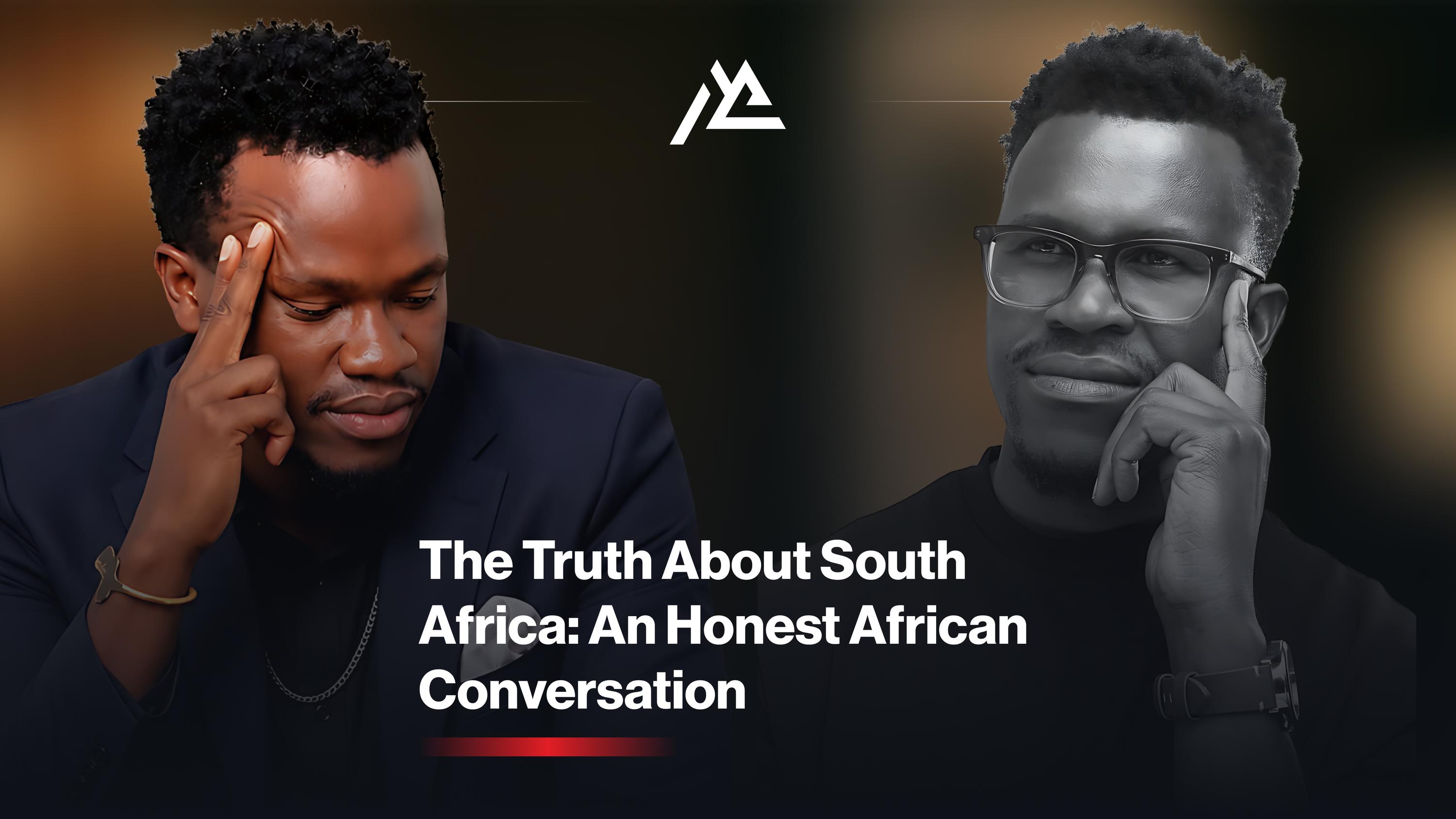
A candid conversation between Mika Chavala and South African missionary Phineas explores xenophobia, leadership, land ownership, Pan-African unity, and the future of Africa beyond the headlines.
By Mika Chavala
Kampala, Uganda — At a time when conversations about South Africa are often dominated by headlines of xenophobic attacks, unemployment, and political instability, a powerful dialogue between Pan-Africanist Mika Chavala and South African missionary Phineas offered a different perspective—one that calls for healing, accountability, and a renewed vision of African unity.
Broadcast live from Uganda, the two speakers explored some of the continent's most pressing issues, including afrophobia, historical trauma, leadership failures, economic inequality, and the future of Pan-Africanism.
Beyond the Headlines
Phineas began by describing his experience in Uganda as a journey back to his roots rather than simply a visit to another country. He spoke about discovering cultural similarities between South African communities and the Bantu peoples of East Africa, saying the experience made him feel "more African" than ever before.
His reflections challenged the notion that African identity should be confined within colonial borders.
The conversation quickly shifted to one of the most controversial subjects surrounding South Africa today—the perception that the country has become increasingly hostile toward fellow Africans.
While acknowledging that attacks against foreign nationals have occurred, Phineas argued that media coverage often amplifies the actions of a small minority while overlooking millions of South Africans who reject xenophobia and continue to support fellow Africans.
"Bad news sells," he suggested, emphasizing that social media does not always represent the attitudes of an entire nation.
Economic Frustration Is Not the Root Cause
Rather than blaming migrants for social tensions, Phineas pointed to deeper structural problems.
He identified corruption, unemployment, and inequality as the real drivers of public frustration, arguing that vulnerable communities often become scapegoats when governments fail to address these challenges.
According to him, immigrants become easy targets because they possess fewer legal and political protections than citizens.
The discussion emphasized that solving these tensions requires addressing governance failures rather than directing public anger toward fellow Africans.
Healing a Wounded Continent
One of the strongest themes throughout the discussion was the idea that Africa remains a continent carrying unresolved historical wounds.
Phineas argued that many conflicts seen today are symptoms of deeper emotional and psychological trauma inherited from colonialism and apartheid.
Instead of allowing these wounds to fuel division, he called for honest dialogue where Africans can confront painful histories together while rebuilding trust across borders.
He urged Africans to remember not only the history of slavery and colonialism but also the civilizations, kingdoms, and achievements that existed long before foreign domination.
"We need to remember the history of crowns, not only the history of chains," he said, encouraging Africans to rediscover the dignity of their past.
Xenophobia, Tribalism, and Human Dignity
The speakers also addressed reports of violence against African migrants living in South Africa.
Phineas condemned attacks on foreign nationals and warned that divisions have increasingly expanded beyond nationality to include discrimination based on ethnicity, language, and appearance.
He argued that Africans cannot consistently advocate for justice abroad while denying the humanity of fellow Africans at home.
The conversation framed respect for human dignity as a moral obligation that should transcend national identity.
Land, Ownership, and Economic Freedom
Economic transformation emerged as another central issue.
Phineas argued that political freedom alone cannot guarantee prosperity without meaningful access to land, business ownership, and productive resources.
Using the analogy of teaching someone to fish without giving them access to a river, he questioned whether education and skills training are sufficient if people remain excluded from economic participation.
The discussion also highlighted concerns over land ownership and wealth distribution, suggesting that many South Africans continue to experience economic exclusion decades after the end of apartheid.
Leadership Under Scrutiny
Throughout the conversation, both speakers repeatedly returned to the issue of leadership.
Rather than placing responsibility on migrants or ordinary citizens, they argued that corruption, weak institutions, and a lack of accountability remain Africa's greatest obstacles.
According to Phineas, leaders should focus on creating opportunities, strengthening governance, and addressing inequality instead of encouraging narratives that divide communities.
He called for a new generation of African leaders motivated by service rather than personal enrichment.
From Competition to Collaboration
The discussion concluded with a broader reflection on Africa's future.
The speakers argued that African nations must move beyond competition and embrace collaboration if the continent is to realize its economic and political potential.
They encouraged stronger regional partnerships, deeper cultural understanding, and continued dialogue among Africans from different countries and backgrounds.
For Mika Chavala, the conversation reinforced a central message of his Pan-African vision: genuine unity begins when Africans see one another not as competitors or strangers, but as members of the same family.
Looking Ahead
As Africa confronts economic uncertainty, youth unemployment, migration, and political transition, conversations such as this highlight the growing demand for a more honest discussion about identity, governance, and continental cooperation.
While the speakers expressed different experiences and perspectives, they shared one conviction—that Africa's future depends not only on its abundant resources but also on its willingness to heal historical wounds, strengthen leadership, and build a culture of solidarity across borders.
Whether one agrees with every viewpoint expressed, the discussion serves as a reminder that the continent's greatest challenges cannot be solved through blame alone. They require dialogue, accountability, and a renewed commitment to the idea that Africa's progress is inseparable from the progress of all its people.
Comments
Join the conversation. You can comment anonymously.
Loading comments…