
Article · 31 August 2026
KNOW YOURSELF, THAT’S POWER. BE YOURSELF, THAT’S FREEDOM.
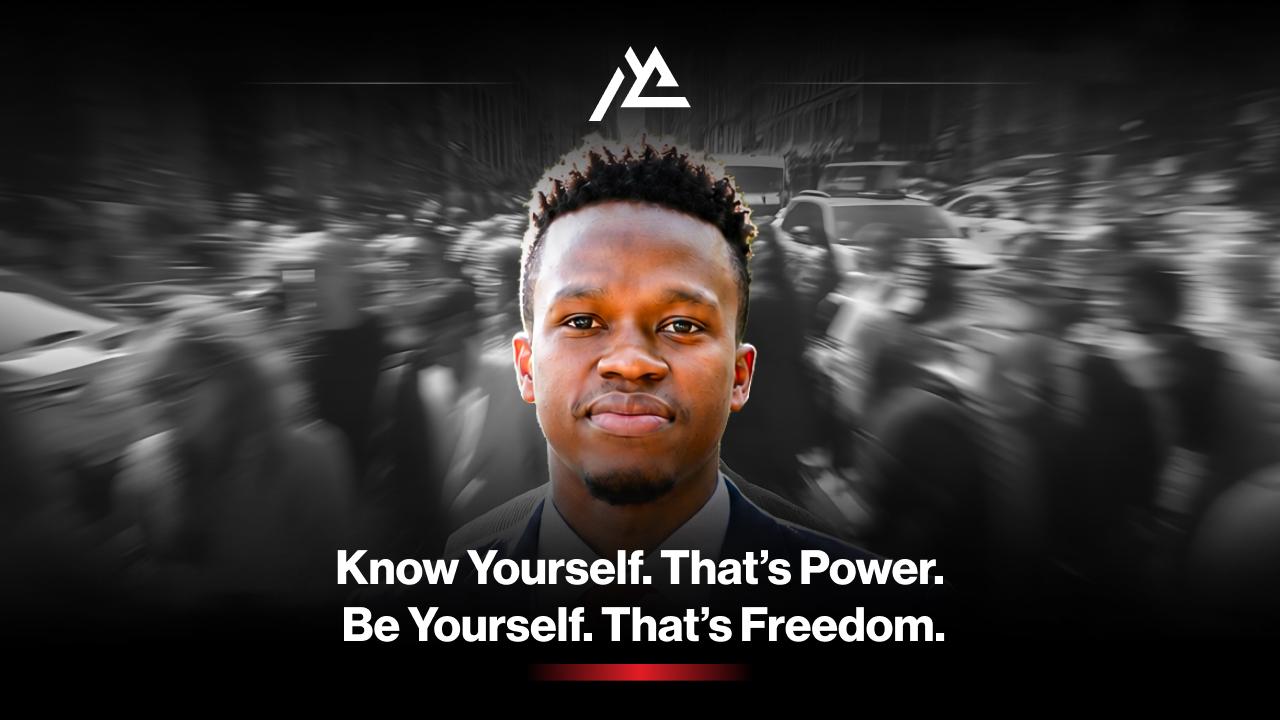
Know yourself — that’s power. Be yourself — that’s freedom. Discover your purpose — that’s responsibility. When you understand who you are, you become less controlled by fear, comparison, social pressure, and other people’s opinions. Self-knowledge gives you the foundation to live authentically, stand by your convictions, and discover your purpose.
The Journey from Identity to Purpose
There are two questions that every human being eventually has to confront, regardless of their background, education, social status, nationality, or position in society: Who am I, and why am I here? The first question leads us into the territory of identity, while the second takes us toward purpose. Although these questions appear simple, they are among the most profound questions we can ask ourselves because the quality of our lives is often determined by how honestly and deeply we answer them. A person who does not understand who they are can easily become defined by circumstances, by society, by culture, by other people’s expectations, or by the desire to be accepted. But there is tremendous power in knowing yourself, just as there is profound freedom in having the courage to be yourself.
Jijue mwenyewe — hiyo ni nguvu.Kuwa wewe mwenyewe — huo ni uhuru.
POWER BEGINS WITH KNOWING YOURSELF
Power is commonly understood as the ability or capacity to influence, control, make decisions, or bring about change. In society, we often associate power with political office, financial resources, physical strength, institutional authority, or social influence. However, some of the most important forms of power do not come from what a person possesses externally but from what they have developed internally. Personal power is found in self-control, confidence, discipline, courage, emotional maturity, and the ability to make decisions according to one’s values rather than being constantly controlled by circumstances or the opinions of others.
Mental power is equally important because the ability to think clearly, question assumptions, understand situations, distinguish truth from misinformation, and make independent decisions determines how effectively a person can navigate life. Social and political power may allow someone to influence the lives of others, while physical power provides the strength and energy necessary to act. Yet beneath all these forms of power lies something even more fundamental: self-knowledge. When you understand who you are, what you value, what you believe, what you can offer, and what you stand for, you become much harder to manipulate through fear, insecurity, comparison, or public opinion.
This is why knowing yourself is a form of power. When you do not know yourself, almost anyone can give you an identity. Society can tell you what success should look like, your peers can determine what you should desire, social media can tell you how you should look, your circumstances can convince you that you are limited, and even your failures can persuade you that you are incapable of becoming something greater. But when you know yourself deeply, you develop an internal foundation from which you can evaluate the voices around you without allowing every voice to redefine you.
Know yourself, that’s power.
IDENTITY COMES BEFORE PURPOSE
We often encourage young people to discover their purpose, but perhaps we do not spend enough time helping them understand their identity. Before asking yourself what you are supposed to accomplish, it is important to ask yourself who you are. Purpose is not simply about finding something to do; it is about understanding the kind of person you are becoming and determining how your abilities, experiences, values, knowledge, and convictions can be transformed into meaningful contribution.
Your identity provides an important foundation for understanding your purpose. Your experiences may have shaped you, your struggles may have taught you something, your talents may reveal areas where you can contribute, and the things you care deeply about may point toward problems you are uniquely motivated to solve.
Purpose does not necessarily arrive as a dramatic revelation; sometimes it emerges gradually as you become more aware of yourself and more willing to pay attention to the responsibilities and opportunities that life places before you.
This is why the journey of self-discovery matters. There is a significant difference between discovering yourself and inventing yourself to satisfy other people. Growth does not mean abandoning who you are every time you enter a new environment. Maturity means becoming more deeply aware of yourself while remaining open to learning, correction, and transformation. You should be able to grow without constantly losing your identity.
HOW DO YOU KNOW WHEN YOU ARE EXPERIENCING AN IDENTITY CRISIS?
An identity crisis is not always dramatic, and it does not always announce itself through obvious confusion. Sometimes it appears quietly through the way a person lives, makes decisions, relates to others, or measures their worth.
You may begin to notice that you constantly change yourself depending on the people around you, that you need continuous approval before trusting your own decisions, or that you are pursuing a life that looks successful externally but does not feel meaningful internally. You may find yourself comparing your journey with everyone else’s journey and gradually losing the ability to recognize what you genuinely want for yourself.
An identity crisis can also emerge when a person has built their entire sense of worth around a particular position, relationship, career, amount of money, level of popularity, or social recognition. When that external thing disappears, they suddenly feel as though they have lost themselves. This happens because they confused what they have with who they are.
A title can describe your position, but it cannot completely define your identity. Wealth can provide opportunities, but it cannot tell you who you are. Popularity can give you visibility, but it cannot give you character. Even success can become dangerous when it becomes the only source from which you derive your sense of worth.
One of the most important moments in personal development therefore comes when you are willing to ask yourself uncomfortable questions:
Who am I when nobody is watching?
What do I genuinely believe when there is no audience to impress?
What values would I continue to defend even if doing so cost me popularity?
What remains of me if the title, money, recognition, relationships, and achievements that people associate with me are taken away?
These questions may be uncomfortable, but they can lead to a much deeper understanding of identity.
FREEDOM IS MORE THAN THE ABSENCE OF CONTROL
Freedom is generally understood as the condition in which a person can live, choose, speak, and act without unjust control, oppression, or unreasonable restriction. Political freedom is therefore essential because people need rights, fair laws, participation in governance, and protection from oppression. Economic freedom also matters because individuals need meaningful opportunities to work, create, trade, build businesses, and improve their lives without unjust barriers.
However, freedom also has an internal dimension that is often overlooked. A person can live in a politically free society while remaining internally imprisoned by fear, insecurity, hatred, ignorance, shame, or the constant need for approval. Someone may have the legal right to speak but remain silent because they are terrified of what people will think.
Someone may have the freedom to choose their career but spend their entire life pursuing a path they never wanted because they are afraid of disappointing their family or society. Someone may have every external opportunity available to them and still remain trapped by the belief that they are not worthy of those opportunities.
This is why freedom must also involve the courage to become who you truly are. Being yourself does not mean rejecting accountability, refusing correction, or assuming that everything you think or feel is automatically right. Authenticity requires self-awareness and responsibility. It means having the courage to live according to deeply examined values rather than constantly performing a version of yourself designed to receive approval from others.
Freedom is being yourself without asking permission to exist.
CAN THE SPIRITUAL WORLD INFLUENCE OUR IDENTITY?
For many people, identity cannot be separated from spirituality. Across generations and cultures, human beings have searched beyond the physical world for answers about existence, meaning, morality, destiny, and purpose. Religious traditions, particularly Christianity, understand human identity as deeply connected to the relationship between humanity and God. From this perspective, identity is not simply something society gives us or something we create for ourselves; it is also connected to the question of who we were created to become and what purpose God has given our lives.
This raises an important question: Can the spiritual world influence identity? For people who believe in a spiritual reality, the answer is significant because spiritual beliefs can shape how a person understands their worth, purpose, morality, relationships, and future. At the same time, this area requires discernment because not every spiritual claim, voice, teaching, or interpretation should automatically be accepted without examination. A healthy spiritual foundation should encourage a person to pursue truth, wisdom, character, love, responsibility, humility, and a deeper understanding of purpose rather than simply creating fear or dependency.
The deeper question is therefore not only, “What do I believe?” but also, “Why do I believe what I believe?” Where did this belief come from? Was it inherited from my family or culture? Did I personally examine it? Does it produce wisdom, truth, responsibility, love, and character in my life? Am I willing to examine my understanding when it is challenged? These questions are not necessarily signs of weak faith or uncertainty. In many cases, they are signs of intellectual and spiritual maturity.
WHEN WHAT YOU BELIEVE IS CHALLENGED
One of the greatest tests of identity occurs when someone challenges something you deeply believe. If your identity is completely dependent upon being right all the time, disagreement can feel like a personal attack. But if you have developed a deeper understanding of yourself, you can separate your identity from individual opinions and become capable of examining ideas without feeling that your entire existence is under threat.
Maturity does not mean that you never change your mind. Neither does it mean that you accept every argument presented to you. Maturity means that you are willing to examine what you believe honestly and follow truth wherever that examination leads. Sometimes you will investigate an idea and discover that your original conviction was correct, and you will become even more confident in it. At other times, you may discover that something you believed was incomplete, misunderstood, or simply wrong, and you will have the humility to change.
There is strength in being able to say, “I have examined this carefully, and I still believe.” There is also strength in being able to say, “I have never examined this deeply enough, and I am willing to learn.” Both responses can come from a person who is secure in their identity. The objective should not be to create people who are incapable of changing their minds; it should be to develop people who understand why they believe what they believe and who have enough courage to pursue truth even when truth requires transformation.
FROM IDENTITY TO PURPOSE
Self-knowledge should never become an endless exercise in looking inward without eventually producing something meaningful outward. Once you begin to understand who you are, you must eventually ask what you intend to do with the person you are becoming. Your gifts are not merely for admiration, your knowledge is not merely for accumulation, and your influence is not merely for personal recognition. They become meaningful when they are directed toward contribution.
This is where identity and purpose meet. A person who knows their identity but refuses responsibility can become self-centred, while someone who pursues purpose without understanding themselves can spend years trying to live a life that is fundamentally disconnected from who they are. But when identity and purpose come together, a different kind of leadership begins to emerge. You stop asking only what life can give you and begin asking what you can contribute to the lives of others.
This is particularly important for leadership because leadership is ultimately about responsibility. The deeper you understand yourself, the more consciously you can use your influence. You become less interested in occupying a position simply for status and more interested in using that position to solve problems, develop people, create opportunities, and leave something meaningful behind.
THE AFRICAN QUESTION: WHO ARE WE?
The question of identity is not only personal; it is also civilizational. Africa’s future will depend not only on economic development, technological advancement, infrastructure, political reform, and institutional strength, but also on the ability of Africans to develop a confident and constructive understanding of who they are.
For generations, many Africans have been forced to understand themselves through narratives created by others. This does not mean that Africa should reject the rest of the world or romanticize everything from its past. Rather, it means that Africa must develop the intellectual confidence to examine its history honestly, preserve what is valuable, challenge what must change, and participate in the global community from a position of dignity rather than permanent psychological dependence.
Africa needs a generation that can learn from the world without losing itself, embrace technological progress without abandoning its cultural foundations, participate in global conversations without surrendering its voice, and understand its history without becoming imprisoned by it. The question should not simply be whether Africa can become like other parts of the world. The deeper question is what Africa can become when Africans fully understand their identity, recognize their potential, confront their weaknesses, and take responsibility for their future.
The same principle applies to every individual. You cannot build a meaningful future while constantly running away from yourself.
KNOW YOURSELF. BE YOURSELF. DISCOVER YOUR PURPOSE.
Knowing yourself is not an act of arrogance; it is an act of responsibility. Being yourself does not mean refusing to grow; it means growing without constantly surrendering your identity to the expectations of others. Freedom does not mean living without boundaries or accountability; it means having the capacity to make meaningful choices and live according to truth rather than being permanently controlled by fear, conformity, ignorance, or oppression.
The journey begins with self-examination. Take the time to understand your character, your values, your strengths, your weaknesses, your convictions, your experiences, and the things that genuinely matter to you. Question what you believe, examine where those beliefs came from, seek wisdom, develop your mind, strengthen your character, and remain humble enough to learn. Then ask the deeper question of purpose: How can the person I am becoming become a blessing to other people and contribute something meaningful to the world?
The world does not need another imitation. It does not need you to spend your entire life trying to become someone else because society has convinced you that another person’s life is the standard by which yours should be measured. The world needs people who have taken the difficult journey inward, discovered who they are, developed the courage to live authentically, and accepted the responsibility that comes with their gifts and influence.
Know yourself — that’s power.Be yourself — that’s freedom.Discover your purpose — that’s responsibility.Jijue mwenyewe — hiyo ni nguvu.Kuwa wewe mwenyewe — huo ni uhuru.Gundua kusudi lako — huo ni wajibu.
— Mika Chavala
Keep reading
Comments
Join the conversation. You can comment anonymously.
Loading comments…