
Article · 23 July 2026
Africa Must Wake Up: The Hidden Cost of China’s Growing Influence Across the Continent
An opinion on China’s growing influence in Africa, the future of African industry, and why sustainable development must be led by Africans.
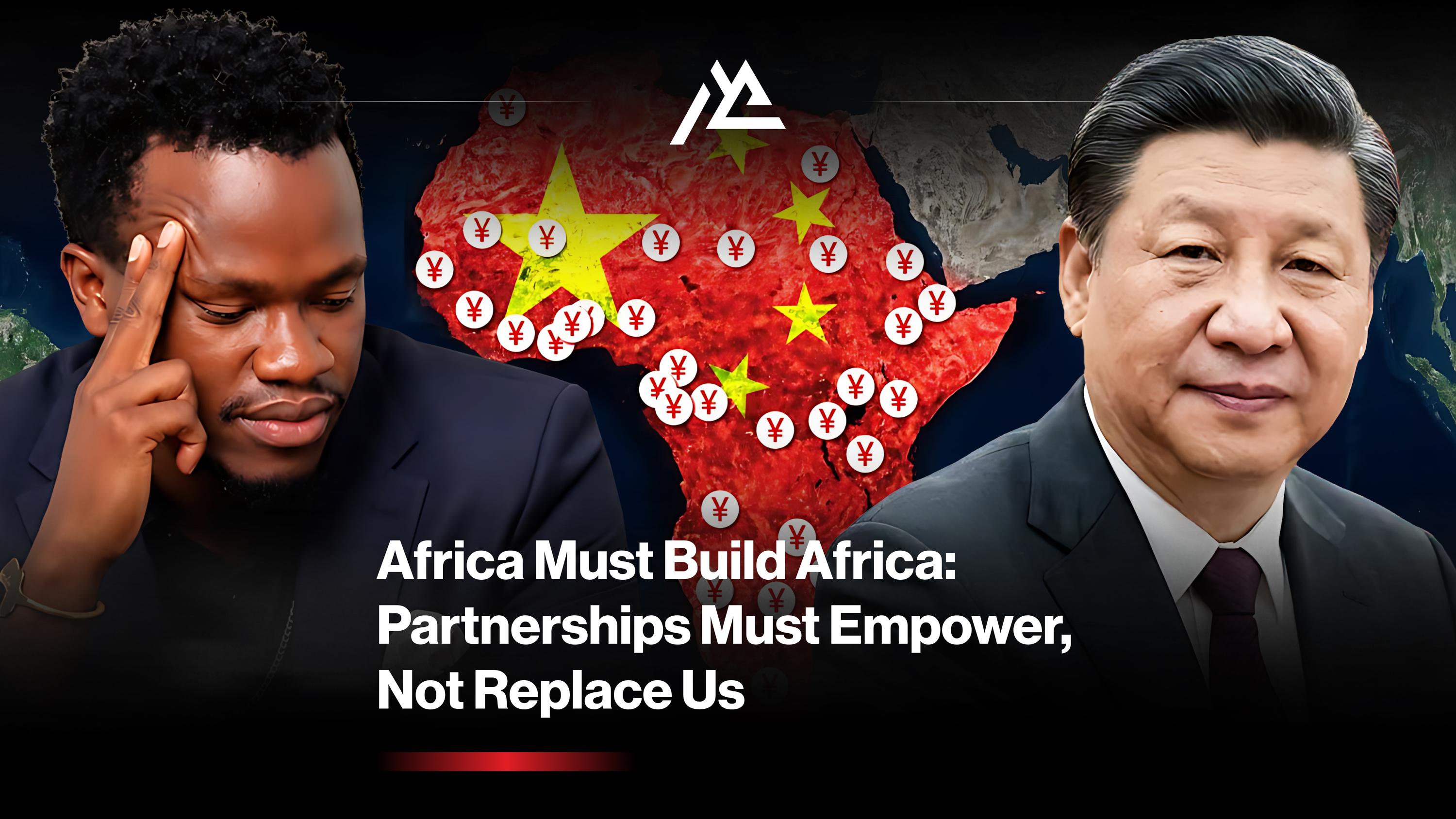
Africa Must Build Africa: Partnerships Must Empower, Not Replace Us
By Mika ChavalaAcross Africa, China’s economic footprint is becoming impossible to ignore. Chinese companies are building roads, railways, ports, factories, and commercial centers. At the same time, low-cost Chinese products are filling markets across the continent, often at prices local manufacturers struggle to match.
The scale of this engagement continues to grow. In the first half of 2025 alone, Chinese companies signed approximately US$30.5 billion worth of construction contracts across Africa, further cementing China’s position as one of the continent’s largest infrastructure partners.
This raises an important question: What kind of economy are we building for future generations?
My concern is not with China. Every nation is expected to pursue its own national interest. China has done exactly that—and very successfully. The real question is whether Africa is defending its own interests with the same determination.
Many African countries have opened their markets widely to foreign businesses with generous incentives and relatively few conditions. Meanwhile, China has spent decades carefully protecting strategic sectors of its economy. Although China has opened many industries to foreign investment, it still maintains restrictions in sectors it considers strategically important, limiting foreign ownership or requiring specific conditions for market access.
That should make Africans pause and ask: If major economies protect strategic industries, why are many African countries willing to give away theirs so easily?
The issue is not whether Chinese companies should invest in Africa. Investment is welcome. The issue is whether that investment is creating strong African businesses, transferring technology, developing local industries, and preparing African entrepreneurs to compete globally.
Too often, we celebrate the arrival of foreign companies while neglecting our own manufacturers. We praise imported products while ignoring locally made goods. We create consumers instead of producers.
No continent has ever become wealthy by depending primarily on imported goods.
Africa possesses 30% of the world’s known mineral resources, nearly 60% of the world’s uncultivated arable land, and one of the youngest populations on Earth. Yet many of the finished products consumed across the continent are still imported. We export raw materials and import finished goods at higher prices, leaving much of the value creation—and the jobs—in other countries.
This cycle must change.
Partnerships should help African businesses grow, not replace them. Infrastructure projects should develop local engineering talent. Manufacturing investments should create African-owned supply chains. Technology partnerships should transfer knowledge instead of creating permanent dependence.
Development is not measured by how many foreign companies operate within our borders. It is measured by how many globally competitive African companies we build ourselves.
Dear Africa, welcoming investors is not a badge of honor by itself. Building African industries is.
Let us negotiate with confidence. Let us protect strategic sectors where necessary. Let us require meaningful technology transfer, support local content policies, strengthen African manufacturing, and ensure that every major investment leaves behind skills, industries, and opportunities for future generations.
China built China by putting Chinese interests first. Every major economy protects industries it considers vital to its future. Africa must also have the courage to prioritize African interests.
Our greatest resource is not beneath our soil—it is the creativity, talent, and determination of our people. The future of this continent must be made by African hands, powered by African ideas, and driven by African enterprise.


Comments
Join the conversation. You can comment anonymously.
Loading comments…